
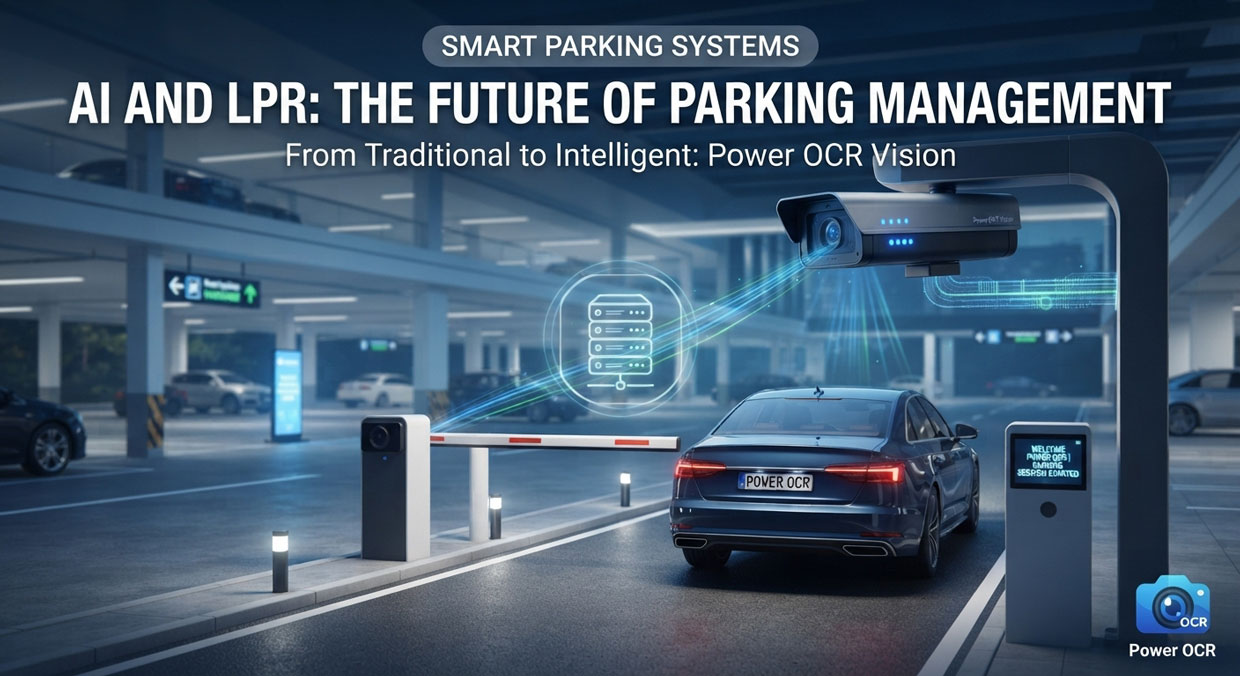
For decades, parking management was built around a simple formula: find a space, park the vehicle, collect the payment, and move on. That model worked when parking operations were relatively small, traffic patterns were predictable, and the number of vehicles could be managed with meters, tickets, gates, and human enforcement.
Today, cities have changed, parking has evolved, and the technology behind it is shifting even faster. From major metropolitan areas like Miami, New York, Los Angeles, and Chicago, operators are handling more vehicles, complex regulations, diverse payment options, and demanding customers. Yet, many parking facilities still treat their installed cameras primarily as basic security devices. The next generation of parking management is changing this by turning cameras into intelligent operational infrastructure through AI, License Plate Recognition (LPR), and centralized parking intelligence.
The Parking Industry Has a Data Problem
A modern parking operation can have cameras everywhere and still operate with surprisingly fragmented information. A vehicle enters, a camera captures it, a payment system records a transaction, another manages permits, and an enforcement platform monitors violations. Somewhere in the middle of all this, someone still has to connect the dots—which is where traditional parking management becomes expensive.
The issue is not necessarily a lack of data; rather, it is that the data remains disconnected. Seeing a vehicle is not the same as understanding what it means to the operation: What is the license plate? When did it arrive? Has the driver paid? Is it in a restricted area? In a truly intelligent system, these questions become part of a single, cohesive operational story.
What Is a Smart Parking System?
A smart parking system is far more than a digital payment application or a parking availability sign. It is an integrated technology environment capable of using data, cameras, sensors, software, artificial intelligence, and automated processes to make parking operations more visible, automated, and intelligent.
This is where License Plate Recognition (LPR or ALPR) becomes essential. Instead of depending entirely on physical tickets, parking permits, or manual inspections, a vehicle is recognized directly through its license plate, effectively becoming its own digital identifier. For drivers, the experience becomes almost invisible, while operators transform physical events into structured digital information.
The Camera Is Not the Smart Part
Installing more cameras does not automatically create a smarter parking operation. A camera simply captures an image; the real value begins afterward as the system interprets what it sees. Real-world conditions like dirt, fast movement, changing lighting, rain, glare, and foreign plates complicate recognition.
This is where AI-powered computer vision and specialized ALPR technology become critical. The goal is not merely capturing more images, but transforming those images into reliable operational information without requiring complete hardware replacements across existing infrastructure.
Why Centralized ALPR Matters
When an operator scales from a single facility to tens or hundreds of locations, individual cameras acting as isolated points of intelligence are no longer efficient. Centralized ALPR architecture creates a common visual intelligence layer across the entire network.
New garages, enforcement zones, and rules can be integrated seamlessly without fragmenting the intelligence layer. More cameras no longer mean more operational complexity—they translate directly into greater network intelligence.
From Parking Enforcement to Parking Intelligence
Traditional parking enforcement focuses narrowly on violations: Has the driver paid? Has the time been exceeded? AI-powered systems move operations beyond simple enforcement by connecting a license plate to its location, timestamp, session, permit status, and payment event.
By automating repetitive visual processing, artificial intelligence handles continuous monitoring, allowing human teams to focus on exceptions, decisions, customer service, and strategic management rather than tedious manual tasks.
Can Existing Parking Cameras Become Smarter?
Modernization does not always require replacing everything. Operators who already have cameras installed can evaluate whether their existing visual infrastructure and image quality can support an advanced ALPR and computer vision environment.
Instead of asking "How many new cameras do we need?" operators can shift toward a more strategic question: "How much intelligence can we generate from the infrastructure we already have?"
Smart Parking Does Not Have to Mean More Hardware
There is a common assumption that smarter parking automatically requires more devices, sensors, and servers. However, intelligence comes from improving the software and intelligence layer behind existing infrastructure, preventing massive capital expenses on hardware accumulation.
This is precisely where Power OCR fits into the new parking model. Power OCR is not just another OCR engine; it turns visual information into structured, actionable vehicle intelligence. By acting as the intelligence behind the camera's eyes, Power OCR enables operators to scale effortlessly from a single facility to an entire network.
The Parking Revolution Is Already Underway
The transformation of urban parking is driven by a growing demand for efficiency and the management of complex urban data. Traditional management built on meters and manual enforcement is rapidly giving way to automated, AI-driven, and centralized operational ecosystems.
The future of parking will not be defined by how many cameras a city installs, but by how intelligently those cameras work together. The camera sees. Power OCR understands. AI turns images into intelligence.